About Me
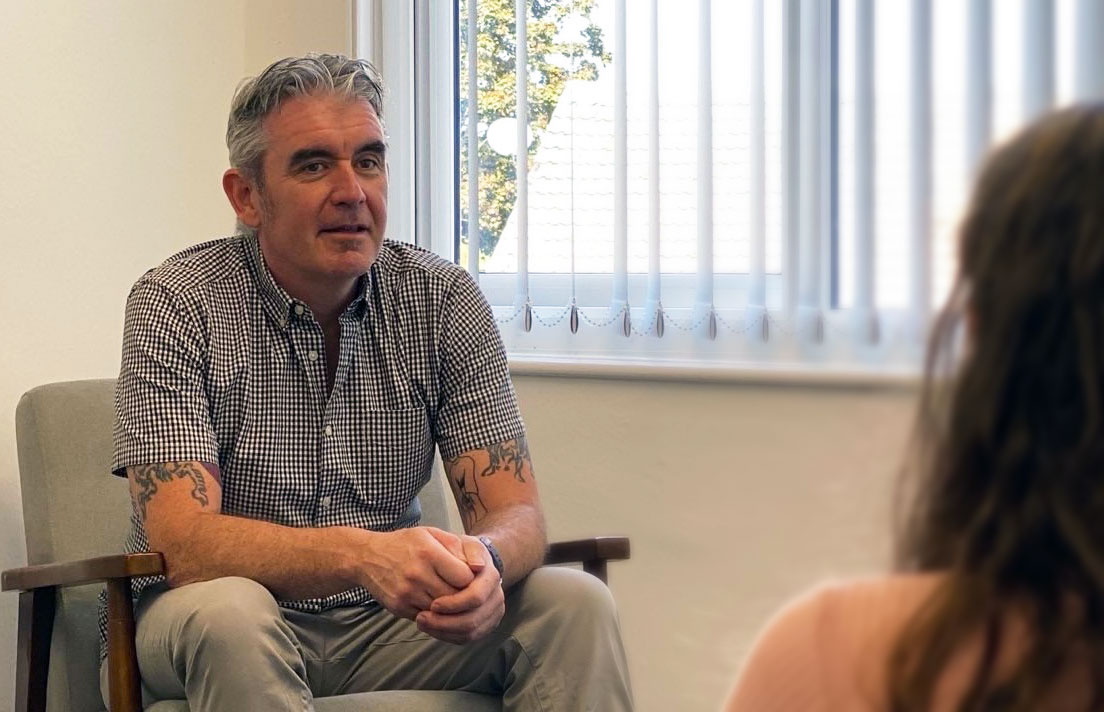
I offer a safe, collaborative, and down-to-earth therapeutic space where people can explore who they are, make sense of change, and move toward a life that feels more authentic and sustainable on their own terms.
How I came into psychotherapy
I came into psychotherapy through a long-standing commitment to helping people. What has always mattered to me is not status, income, or professional prestige, but the sense that I can genuinely contribute something meaningful to another person's life.
Before becoming a therapist, I spent many years working in education. Over time, I became increasingly uncomfortable with how much emphasis was placed on outcomes, grades, employability, and measurable achievement, while the person themselves could easily become secondary. I became more interested in the questions that sit beneath performance: How comfortable does someone feel within themselves? How do they navigate identity, relationships, culture, sexuality, belonging, and the many experiences that shape who they become?
That shift in perspective led me into psychotherapy. I have trained extensively, including in observational psychotherapy with children and in therapeutic work with adults, because I believe that if someone is trusting me with their inner world, I have a responsibility to be thoughtful, informed, and well qualified in the work I do.
What it's like to work with me
The foundation of my work is the relationship itself. I believe people can only explore what is really happening for them when they feel safe enough to bring all of themselves into the room.
Clients often describe my approach as collaborative, genuine, and non-judgmental. I don't see therapy as a hierarchy where I hold all the answers. I may have training and experience in therapeutic models, but the client is always the expert in who they are. Therapy works best, in my view, when two people work together to make sense of a life, rather than one person telling the other what they should think or feel.
I also try to be accessible and real. I don't believe in hiding behind professional distance or unnecessary formality. The goal is for clients to feel that they are talking with a human being who is fully present with them, not receiving a standardised response that could be given to anyone.
Who I work particularly well with
While I work with a range of clients, there are several groups I find myself connecting with especially naturally.
People navigating unexpected life changes. Those moments when life stops following the script someone thought they were living, and they need space to make sense of a new reality.
Men. Many of the men I work with have spent years feeling that they should be strong, self-contained, and emotionally silent. I aim to offer a space where vulnerability is not seen as weakness, but as part of being fully human.
Neurodivergent clients. I work hard to create an environment where people are understood on their own terms, rather than measured against narrow ideas of what is "normal."
Members of the Irish diaspora. As someone with lived experience of being Irish abroad, I understand many of the cultural nuances, tensions, and questions of identity that can accompany that experience.
What I believe about change
I don't believe change can be forced. I believe it becomes possible when the right conditions are created.
Those conditions include safety, trust, non-judgment, and a relationship where the client feels genuinely seen. From there, people often begin to look differently at the beliefs, attitudes, and coping strategies they have been carrying, sometimes for many years.
One of the most valuable parts of therapy can be asking: Is this belief still serving me? Is it relevant to who I am now, or is it something I learned long ago that has outlived its usefulness?
I also believe readiness matters. Human beings naturally hold on to what feels familiar, even when it causes pain. Therapy should respect that reality rather than shame people for it. Lasting change tends to happen at a pace the person can genuinely integrate into their life.
My communication style
My natural style is conversational, warm, and free of unnecessary jargon. If I'm speaking with another professional, technical language has its place. But in therapy, I don't want people to feel excluded, intimidated, or as though they need a psychology degree to understand what's happening.
I often use humour, stories, metaphors, and everyday examples because they help complex experiences become more understandable and more human. I'm not interested in delivering a lecture or trying to fit someone into a theory. I'm interested in finding language that makes sense within their life and experience.
The values I won't compromise on
The client must remain at the centre of the work.
That means protecting confidentiality, working without judgment, and being honest about whose goals are actually being pursued. If someone is seeking therapy primarily to become the person somebody else wants them to be, I think that deserves careful exploration rather than automatic agreement.
I'm also cautious about therapy becoming overly focused on ticking off goals. Achievements can matter, but if the work only revolves around "If I could just lose weight, stop smoking, get the promotion, find the relationship…", the goalposts often move and the underlying dissatisfaction remains.
For me, ethical therapy is about helping someone build a way of living that is more authentic, sustainable, and genuinely aligned with who they are, rather than offering a temporary fix that leaves the deeper issues untouched.